

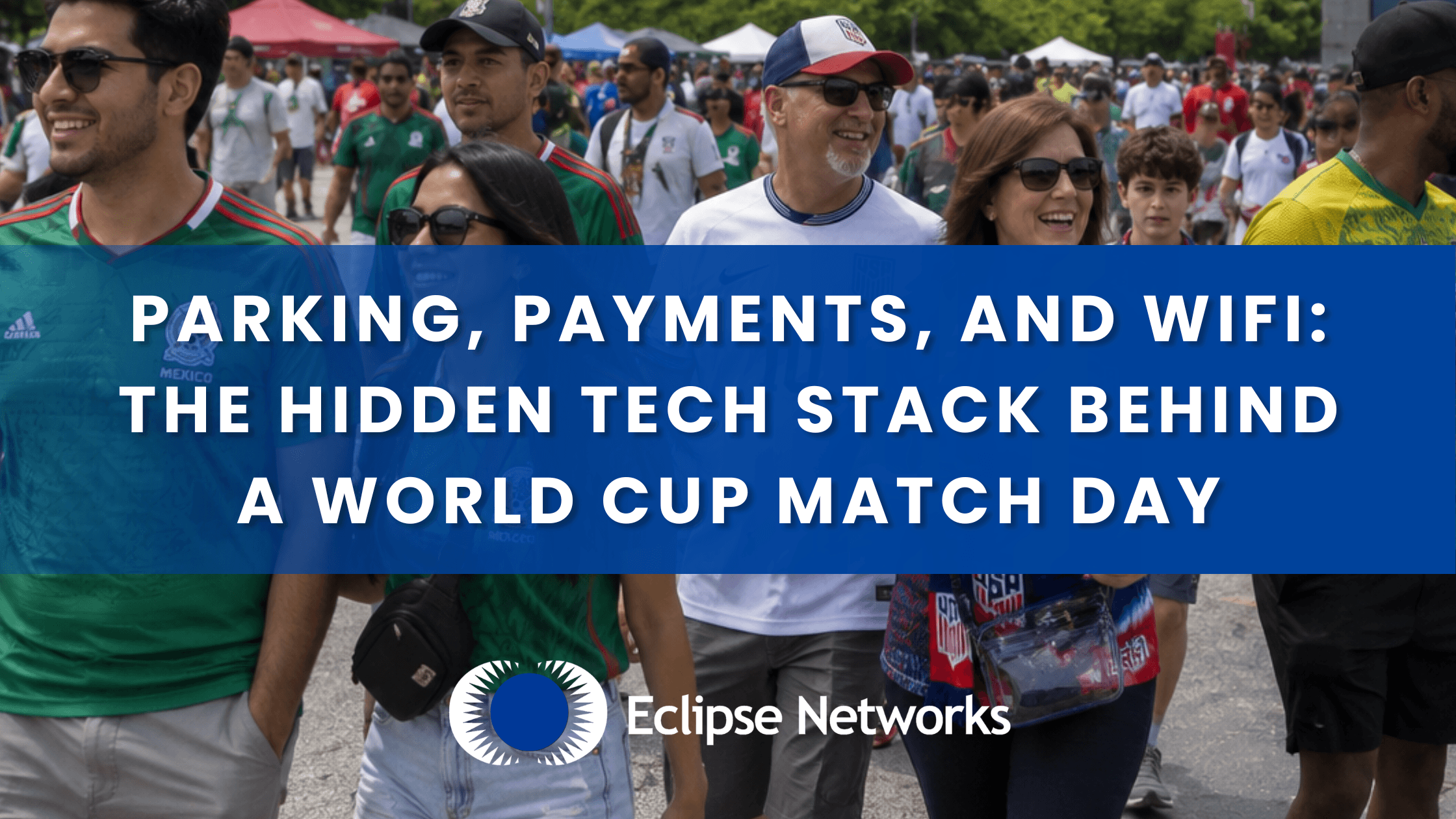
Parking, Payments, and WiFi: The Hidden Tech Stack Behind a World Cup Match Day
For fans attending a match at Atlanta Stadium this summer, the World Cup experience starts well before kickoff and continues long after the final whistle. Parking, concessions, wayfinding, mobile ordering, accessibility services, and in-stadium connectivity all shape how the day actually feels — and every one of them runs on technology infrastructure most fans will never think twice about.
A Fan Experience Built on Layers of Technology
Mercedes-Benz Stadium has spent years building toward this tournament, and the work shows up in the details fans interact with constantly:
- High-density WiFi that extends through the stadium and surrounding plaza, built to support tens of thousands of fans streaming, posting, and staying connected at once
- Mobile app integration for ticketing, in-seat food ordering, and wayfinding that helps fans navigate a 71,000-seat venue without confusion
- Checkout-free and biometric-enabled experiences at concession stands, letting enrolled fans pay with a glance instead of a wallet
- Real-time operational systems that help stadium staff track crowd flow, manage concessions inventory, and respond to issues as they happen rather than after the fact
None of these features are flashy on their own. Together, they’re the difference between a stadium that feels chaotic and one that feels effortless — and that difference comes down entirely to how well the underlying systems are integrated.
The Infrastructure Investment Behind the Experience
Stadium leadership has been candid that preparing for World Cup-level demand required serious infrastructure investment — described by stadium executives as “not seven figure,” meaning the actual spend runs well beyond that. That investment isn’t really about the World Cup specifically. It’s about building a network and technology foundation flexible enough to support any major event, this tournament included.
That’s an important distinction. The businesses and venues that handle high-profile moments well aren’t the ones that scrambled to prepare at the last minute — they’re the ones whose infrastructure was already strong enough to flex when the moment arrived.
What This Means for Atlanta Businesses Hosting Their Own “Big Moments”
Most businesses won’t host a World Cup match, but plenty will host their own version of a high-stakes event: a product launch, a major client visit, a trade show booth, a company milestone. The lesson from World Cup-level infrastructure planning still applies — the technology that supports a big moment has to be built and tested long before that moment arrives, not scrambled together the week of.
A modern IT strategy isn’t a collection of tools assembled under pressure — it’s a coordinated framework built ahead of time, so that when something important happens, the infrastructure underneath it simply holds. Whether that means reliable network and WiFi infrastructure for a packed event, or a cloud environment that can handle a sudden spike in demand, the planning has to happen well before the day it’s actually tested.
Industry coverage of World Cup host venues has noted that advanced networking and data center technologies are now considered essential infrastructure for any venue expecting to perform reliably at scale — a lesson that applies well beyond professional sports.
How Eclipse Networks Powers Teams like The Swarm
Eclipse Networks is a proud technology partner and sponsor of the Georgia Swarm, and that relationship has given us direct experience supporting the technology behind a high-profile team, its fans, and the full game-day experience. We know what it takes to keep systems reliable when an audience — whether that’s a packed arena or your most important client — is watching closely.
If your business has a big moment on the horizon and you’re not confident your technology is ready for it, contact Eclipse Networks. We’ll help make sure your infrastructure performs exactly when it needs to.
