

How Atlanta Stadium’s Video and Broadcast Systems Survive World Cup-Level Demand
When Morocco and Haiti take the field at Atlanta Stadium, every fan in the building — and millions watching around the world — will expect one thing without ever thinking about it: that the scoreboard, the replays, and the in-stadium experience simply work. No delays. No glitches. No blank screens during a goal celebration.
That expectation is the product of an enormous amount of invisible technology infrastructure.
More Than a Scoreboard
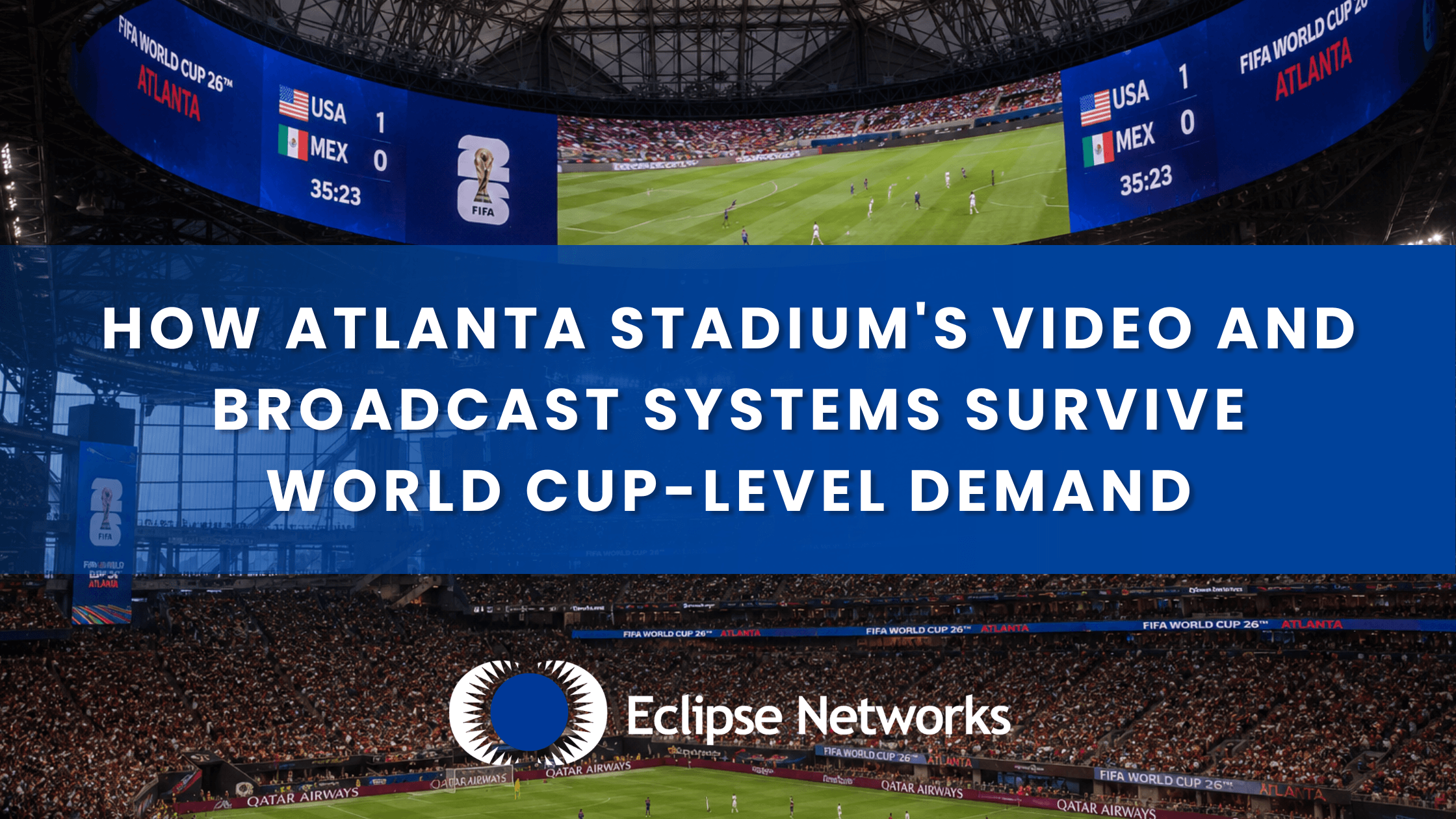
Mercedes-Benz Stadium’s signature video feature is its 360-degree “Halo Board” — the largest video display of its kind, wrapping the underside of the stadium’s roof. Running a display at that scale during a live match means processing real-time video feeds, instant replays, graphics, and sponsor content simultaneously, all synced perfectly to what’s happening on the pitch.
That kind of performance depends entirely on the network and data infrastructure behind it. World Cup host venues including Atlanta Stadium rely on advanced networking and data center technology to manage the volume of data moving between cameras, replay systems, broadcast trucks, and the displays fans see in real time. According to coverage of stadium technology preparations for the tournament, this infrastructure has to support everything from ticketing and security to broadcast feeds and fan WiFi simultaneously, without any one system slowing down another.
Why Latency Is the Enemy
In live sports, a delay of even a second or two between what happens on the field and what appears on the scoreboard or broadcast feed is the difference between a seamless experience and a noticeably broken one. Modern stadium networks are built to minimize that latency by processing data as close to the source as possible, rather than routing everything through distant systems that add delay.
This is the same principle behind modern business network design, just at a different scale: the closer your systems are to where the work actually happens, and the better those systems are architected to talk to each other, the less friction — and the fewer surprises — show up downstream.
When Stadium Technology and Everyday IT Problems Overlap
It’s tempting to think stadium-scale technology has nothing in common with a typical Atlanta business’s IT environment. In practice, the underlying challenges are remarkably similar: multiple systems that all have to work together instead of working in isolation.
Tool sprawl and disconnected systems create exactly the kind of fragmentation that stadium technology teams work hard to avoid — overlapping platforms, inconsistent monitoring, and no single point of accountability when something breaks. A scoreboard that lags during a World Cup match is a visible, public version of the same root problem many businesses experience quietly every day: systems that were added one at a time, without a unifying strategy behind them.
A well-run technology environment — whether it’s a 71,000-seat stadium or a 50-person company — depends on infrastructure planning that treats systems as connected parts of one environment, not a collection of separate tools.
Eclipse Networks: Proud Partners in High-Stakes Technology
Eclipse Networks is a proud technology partner and sponsor of the Georgia Swarm, where we’ve seen firsthand what it takes to keep the lights, the video board, and the in-arena systems running flawlessly on game night. That experience supporting high-profile teams and live events shapes how we think about infrastructure for every business we work with — because the stakes may be different, but the principle is the same: the systems that matter most can’t afford to fail when people are counting on them.
If your business’s technology infrastructure feels more like a collection of disconnected tools than a coordinated system, contact Eclipse Networks. We’ll help you find out where the gaps are before they show up at the worst possible time.
